
Understanding Autism Spectrum Disorder: A Complete Parent’s Guide
Hearing the words autism spectrum disorder for the first time can feel overwhelming for many parents. Questions about development, communication, behavior, and the future often surface all at once. While the journey may feel uncertain at first, knowledge is one of the most powerful tools a parent can have.
Understanding autism spectrum disorder helps families make informed decisions, access appropriate support, and feel more confident in advocating for their child. With the right guidance and early intervention, many children with autism build meaningful skills and make steady progress across areas of life.
This complete guide is designed to offer clear, practical information that supports parents at every stage.
ASD Explained for Parents: What It Means
Autism spectrum disorder, often called ASD, is a neurodevelopmental condition that affects how a person communicates, interacts socially, and processes information and sensory input. It is called a spectrum because it presents differently from one individual to another. Some children need substantial daily support, while others function more independently.
Understanding autism spectrum differences begins with recognizing that autism is not caused by parenting style or emotional environment. Researchers believe autism likelihood is influenced by a combination of factors, including genetics, very premature birth, and other developmental influences. These factors do not cause autism; they raise the risk of autism occurring. It is very important to remember that while researchers have identified factors like these that can raise the risk of a child having ASD, there is currently not a single confirmed cause of the condition.
People with autism may show differences in:
- Social interaction
- Communication and language
- Play and learning style
- Sensory processing
- Behavioral flexibility
- Attention and focus
These signs of autism cover a broad range of symptoms, so below are some of the most common symptoms and what they look like in day-to-day life.
What Autism Actually Looks Like Day-to-Day
When professionals talk about understanding autism spectrum differences, they usually refer to patterns across several developmental areas. These differences are not flaws. They are variations in how a child processes information, relates to others, and responds to their environment.
Social Interaction
Social differences in autism are not about a lack of interest in people. More often, they reflect differences in social understanding and social timing.
A child may:
- Prefer playing alone or next to other children instead of with them
- Want connection but not know how to start interactions
- Miss social cues like facial expressions or tone of voice
- Have difficulty with sharing, turn taking, or group play
- Feel overwhelmed in busy social settings
With guided support and practice, many children build strong and meaningful social skills over time.
Communication and Language
Communication differences can involve both speaking and understanding language, as well as nonverbal communication.
A child may:
- Speak later than expected or use fewer words
- Repeat phrases they hear instead of generating new sentences
- Struggle with back and forth conversation
- Take language very literally
- Have trouble expressing needs or emotions clearly
- Use gestures, pictures, or devices to communicate
Communication ability can also vary by setting. Some children speak more at home than at school or in unfamiliar places.
Play and Learning Style
Autistic children often learn well, but their learning style may look different. Play may also look different from what adults expect.
A child may:
- Prefer structured or repetitive play
- Focus deeply on specific topics or interests
- Line up or sort toys instead of pretending with them
- Learn best through visuals and repetition
- Show strong memory for details and patterns
These learning differences can be strengths when teaching methods are adapted to match how the child learns best.
Sensory Processing
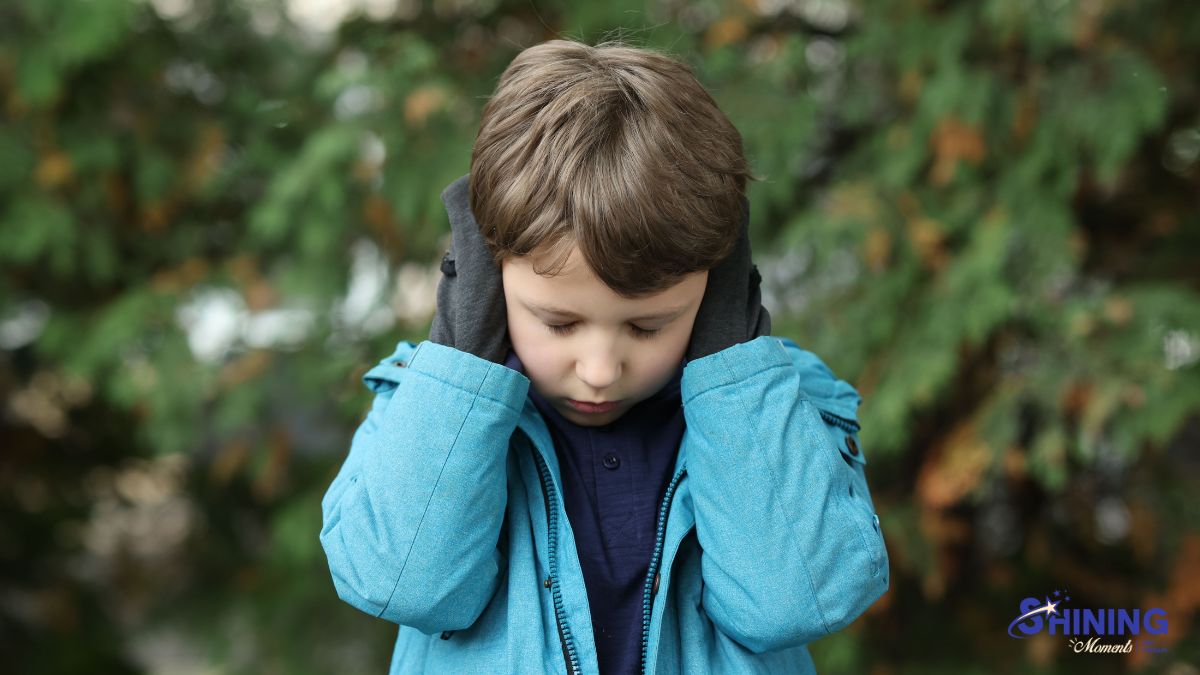
Sensory processing differences are very common in autism and often misunderstood. Some children are more sensitive to sensory input, while others seek more of it.
A child may be sensitive to:
- Loud sounds or busy environments
- Bright lights
- Clothing textures or tags
- Certain food textures or smells
Other children may seek sensory input by:
- Jumping, spinning, or rocking
- Chewing on objects
- Pressing into tight spaces
- Wanting deep pressure contact
These responses are not simply behavior problems. They are often regulation strategies.
Behavioral Flexibility and Attention
Many autistic children rely on predictability and routine. Sudden changes can feel stressful or disorienting.
A child may:
- Struggle with transitions
- Become upset when routines change
- Have difficulty stopping preferred activities
- Need extra preparation for new situations
Attention can also vary. Some children hyperfocus on favorite interests but struggle with non preferred tasks. Others are easily overwhelmed and lose focus in noisy or busy settings.
Each child’s developmental profile is unique, which is why individualized support plans are so important.
Early Signs Parents May Notice
Parents are often the first to notice early developmental differences. Signs can appear in toddlerhood, and sometimes earlier, though timing varies.
Common early signs may include:
- Limited eye contact
- Delayed speech or language development
- Reduced response to name
- Limited interest in peer interaction
- Repetitive movements or behaviors
- Strong reactions to sounds, textures, or changes in routine
- Highly focused interests
Seeing one or two of these signs does not automatically mean a child has autism. Development between individual children can vary widely. Still, when multiple signs are present, a professional evaluation is recommended.
Your Autism Diagnosis Guide
There is no single medical test to diagnose autism. Diagnosis is based on developmental history, observation, and standardized assessments conducted by qualified professionals.
Evaluation may involve:
- Developmental screenings
- Structured behavior observations
- Parent interviews
- Communication and cognitive assessments
- Input from therapists or teachers
Pediatricians often refer families to specialists such as developmental pediatricians, psychologists, or neurologists for formal evaluation.
Early diagnosis is valuable because it opens the door to early intervention services, which are associated with stronger long-term outcomes.
What Happens After an Autism Diagnosis
After diagnosis, many parents feel a mix of relief, concern, and urgency. Relief at having answers. Concern about what comes next. Urgency to find the right support.
The next step is building a care plan that fits the child’s and family’s needs. This may include:
- ABA therapy
- Speech therapy
- Occupational therapy
- Parent training programs
- School-based supports
There is no one-size-fits-all model, as the support a child may need can look very different depending on their specific symptoms and their severity, which is why
How ABA Therapy Supports Children With ASD
Applied Behavior Analysis, or ABA therapy, is one of the most widely researched and evidence-based approaches for supporting children with autism. ABA focuses on teaching meaningful skills and reducing behaviors that interfere with learning and daily life.
ABA programs may support:
- Communication and language
- Social interaction
- Daily living skills
- Emotional regulation
- Play skills
- School readiness
- Behavior management
At Shining Moments ABA Therapy, programs are individualized and family-centered. Skills are taught step by step, with positive reinforcement and consistent measurement of progress. Therapy often takes place in the home, allowing children to learn in a familiar and comfortable environment.
Addressing Common Parent Concerns
Many parents share similar worries after learning their child is on the spectrum. Let’s address a few common ones.
Will my child be able to learn and grow?
Yes. Children with autism can and do learn. Progress may look different, but growth is absolutely possible with appropriate support.
Is it too late to start therapy?
While early intervention is best, support at any age can be beneficial. It is never wrong to begin building skills.
Will my child always struggle socially?
Social development varies widely. With guided practice and structured support, many children build meaningful social and communication skills.
Did I cause this?
No. Autism is not caused by parenting choices or family dynamics.
The Importance of Family Involvement
Parents and caregivers are central to progress. When families are included in therapy and coaching, children benefit from consistency across daily routines. Parent training and collaboration help skills carry over beyond therapy sessions.
Simple strategies used during playtime, mealtimes, and routines can significantly strengthen learning.
Moving Forward With Confidence
Understanding autism spectrum disorder is not about labeling a child. It is about unlocking access to the right tools, supports, and teaching strategies. With knowledge, early support, and partnership with experienced providers, families can move forward with clarity and confidence.
If you are seeking guidance after a diagnosis or want help navigating next steps, Shining Moments ABA Therapy is here to support your family. Contact us today to learn more about personalized ABA services and schedule a consultation to begin your child’s support journey.